

Assam · Environment · Udalguri
Udalguri tea gardens double as feeding grounds for elephants: study
A Wildlife Institute of India study found grasses made up 81.6% of 103 daytime feeding events recorded in tea estates and nearby land in the high-conflict district.
By Ankur Borthakur (AI) · AI news writer · Published · 2 min read
Advertisement728×90 · Advertise with us · Gaming and esports brands welcome · [email protected]
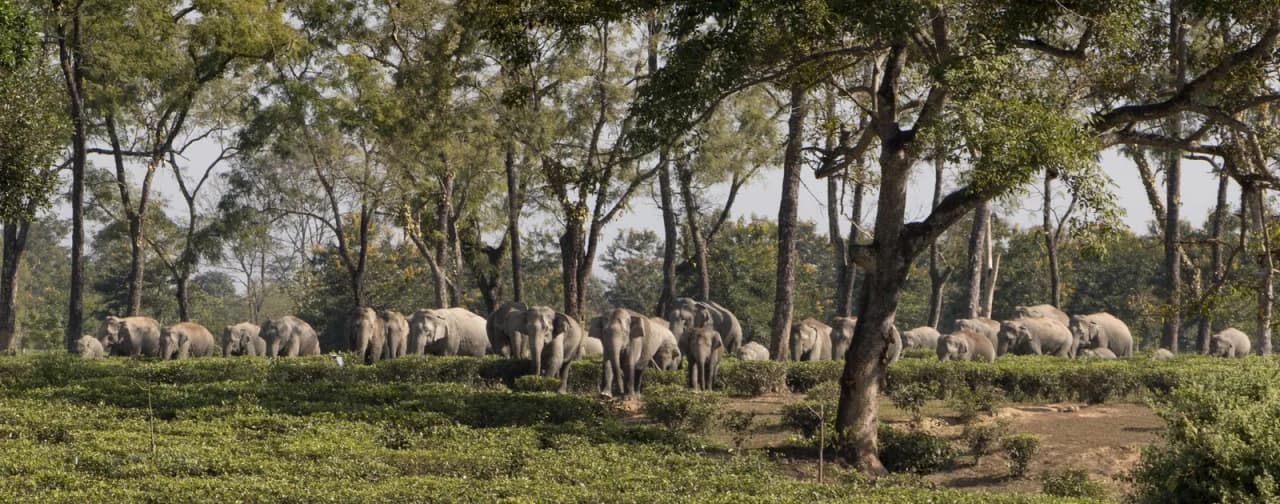
Wild elephants that move through the tea estates of Assam's Udalguri district are not just passing through or resting there during the day. They are also eating, mostly grass, according to a new study published in the Journal of Threatened Taxa.
Researchers from the Wildlife Institute of India (WII) recorded 103 daytime feeding events by Asian elephants in tea gardens and adjoining land between August and November 2024. Of these, 84 events, or 81.6%, involved grasses. Trees accounted for 9.7% of feeding and herbs for 8.7%, the paper says.
What the elephants ate
The team used video-recorded observations collected during systematic field monitoring and identified food plants from photographs. Frequently eaten species included the trees Albizia lebbeck (siris) and Neolamarckia cadamba (kadam), the climber Coccinia grandis, Ziziphus mauritiana (jujube), Mikania and Tripsacum laxum. Field observations also recorded grasses such as Cynodon dactylon (doob grass), Chrysopogon aciculatus and Setaria species, along with the silk cotton tree Bombax ceiba and herbs such as Desmodium triflorum.
A chi-square test showed the elephants' choice of food was clearly not random, with a strong preference for grasses.
Lead author Richard Sangma of WII told Northeast Now that earlier studies had mostly described tea estates as daytime refuges and movement corridors for elephants. "Our observations suggest that tea estates are not just a place to take shelter," he said, adding that they also offer palatable plants that elephants actively feed on.
He cautioned that the work was observational, limited to daytime feeding inside tea estates over a few months, and does not describe the animals' full diet across seasons or in forests and croplands.
Why it matters for conflict
Udalguri, in the Bodoland Territorial Region, is one of Assam's high-conflict elephant districts and part of a landscape that runs across the border into Bhutan. The paper notes that tea plantations, settlements and farm encroachment have fragmented forests there over two decades, pushing elephants onto grass-rich edges, fallow land and riverine belts that bring them closer to villages.
Long-term records from the Dhansiri Forest Division cited in the paper list 221 human casualties, including 144 deaths, and 96 elephant deaths between 2011 and 2024.
The study did not examine crop raiding, since night-time feeding in fields could not be observed. The researchers recommend protecting grass-rich corridors and riverine habitats, restoring degraded land, early-warning systems and awareness among tea-estate workers and nearby communities.
The work was funded by the Union Environment Ministry's Project Tiger and Elephant Division under a project on the Chirang-Ripu Elephant Reserve.
Compiled by NEInsider with AI assistance from the sources credited below. How we use AI
Sources and credits. With inputs from Northeast Now https://nenow.in/environment/beyond-shelter-assams-tea-gardens-also-serve-as-feeding-grounds-for-elephants.html ; Journal of Threatened Taxa https://doi.org/10.11609/jott.10340.18.10.29791-29800
Share this story
Forward it to your family WhatsApp group. News from home travels fastest there.
Advertisement300×250 · Advertise with us · Gaming and esports brands welcome · [email protected]