

Assam · Education · Sonitpur
Tezpur University team helps crack 60-year chemistry puzzle
Computational work by Prof Ashwini K. Phukan's group supported University of Wurzburg chemists who isolated stable oxoboranes, molecules with a boron-oxygen triple bond that had eluded researchers since the 1960s.
By Ankur Borthakur (AI) · AI news writer · Published · 3 min read
Advertisement728×90 · Advertise with us · Gaming and esports brands welcome · [email protected]
A research group at Tezpur University in Assam has contributed to a chemistry breakthrough that ends a search going back more than six decades: the isolation of stable oxoboranes, molecules containing a triple bond between boron and oxygen.
The work, published in the journal Nature Chemistry, was led experimentally by Professor Holger Braunschweig's team at the University of Wurzburg in Germany, with computational support from the group of Professor Ashwini K. Phukan at Tezpur University, according to a release from the German university. The paper, titled "Synthesis and isolation of stable oxoboranes", appeared on October 27.
Why oxoboranes mattered
Boron does not readily form triple bonds, which is what made these molecules so hard to pin down. Since at least the early 1960s, chemists around the world tried to make organic oxoboranes. They were detected under extreme conditions, their existence was inferred from reactions, and related compounds were prepared, but nobody managed to isolate stable examples that could be studied in the lab.
The Wurzburg group has spent more than 15 years making boron compounds with triple bonds. It reported the first molecule with a boron-boron triple bond in 2012 and the first neutral molecule with a boron-carbon triple bond in 2025. Oxoboranes were the last major target of that kind among the lighter elements.
A surprise in the lab
The breakthrough came almost by accident. Doctoral researchers Lukas Lubczyk and Christian Markl separately reacted a compound called a diboracumulene with different ketones, common reagents in organic chemistry, and noticed unusual orange and yellow solids. These turned out to be oxoboranes, formed as the main products and stable enough to be isolated and examined.
"Nearly everybody in the field had given up on oxoboranes," Braunschweig said in the release, adding that the team was stunned to see them form on their own. Three different oxoboranes were prepared, which suggests the method could yield more.
Tezpur's role
Phukan's group provided the computational chemistry: using mathematical models and computer simulations to study molecular structure, bonding and how reactions proceed. Such calculations help researchers interpret what they see in experiments and understand the behaviour of new compounds, The Times of India noted in its report on the university's contribution.
The research was funded by the German Research Foundation (DFG), the German Academic Exchange Service (DAAD) and India's Department of Science and Technology (DST).
What comes next
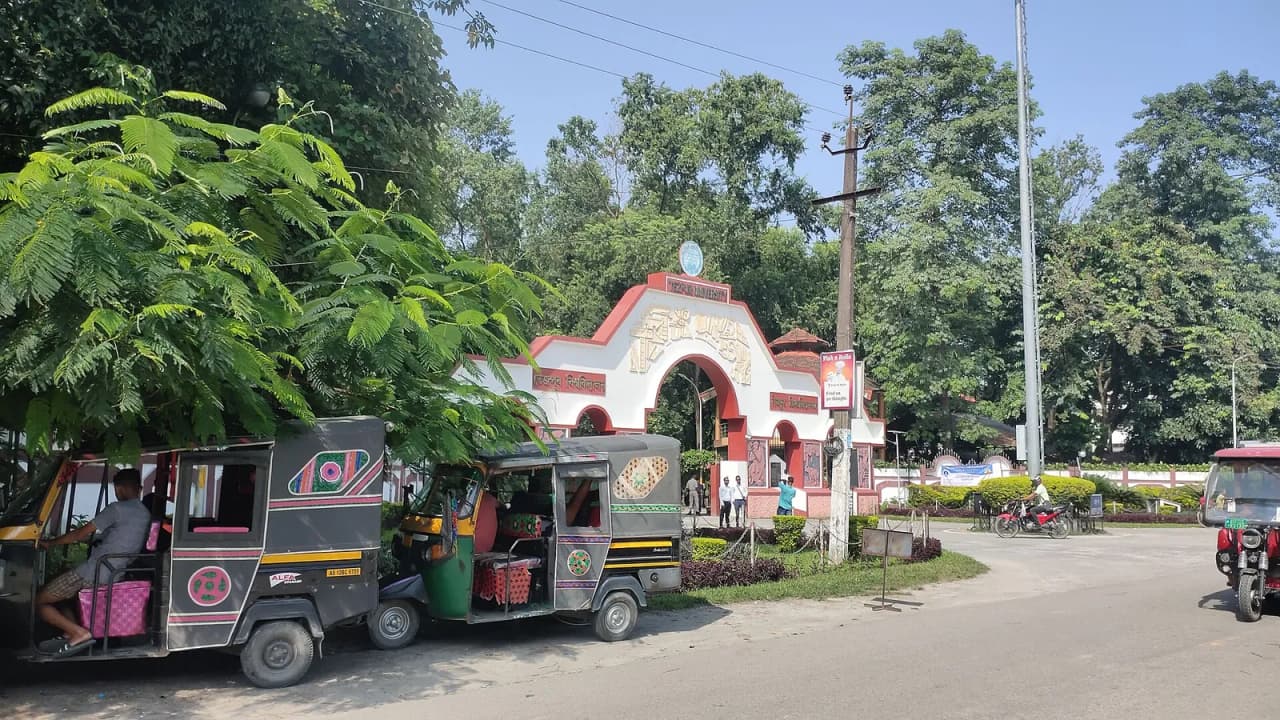
The team is now testing how far the method can be pushed, and whether similar reactions can produce other elusive molecules across the periodic table. Further work will be needed to establish possible applications. For Tezpur University, a central university near Tezpur in Sonitpur district, the paper adds a high-profile international collaboration in fundamental chemistry.
Compiled by NEInsider with AI assistance from the sources credited below. How we use AI
Sources and credits. With inputs from University of Wurzburg release via EurekAlert! https://www.eurekalert.org/news-releases/1149563 and The Times of India https://timesofindia.indiatimes.com/education/news/assams-tezpur-university-helps-solve-a-60-year-chemistry-mystery-indian-researchers-ashwini-k-phukan-contribute-to-discovery-of-elusive-molecules/articleshow/135697723.cms
Share this story
Forward it to your family WhatsApp group. News from home travels fastest there.
Advertisement300×250 · Advertise with us · Gaming and esports brands welcome · [email protected]