

Assam · Environment · Kamrup Metropolitan
Hargila stork dies on power line in Guwahati amid Diwali firecrackers
An endangered greater adjutant stork, panicked by firecrackers late on Monday night, flew into a high-voltage line near Geetanagar College. Conservationist Purnima Devi Barman urged people to limit fireworks.
By Ankur Borthakur (AI) · AI news writer · Published · 2 min read
Advertisement728×90 · Advertise with us · Gaming and esports brands welcome · [email protected]
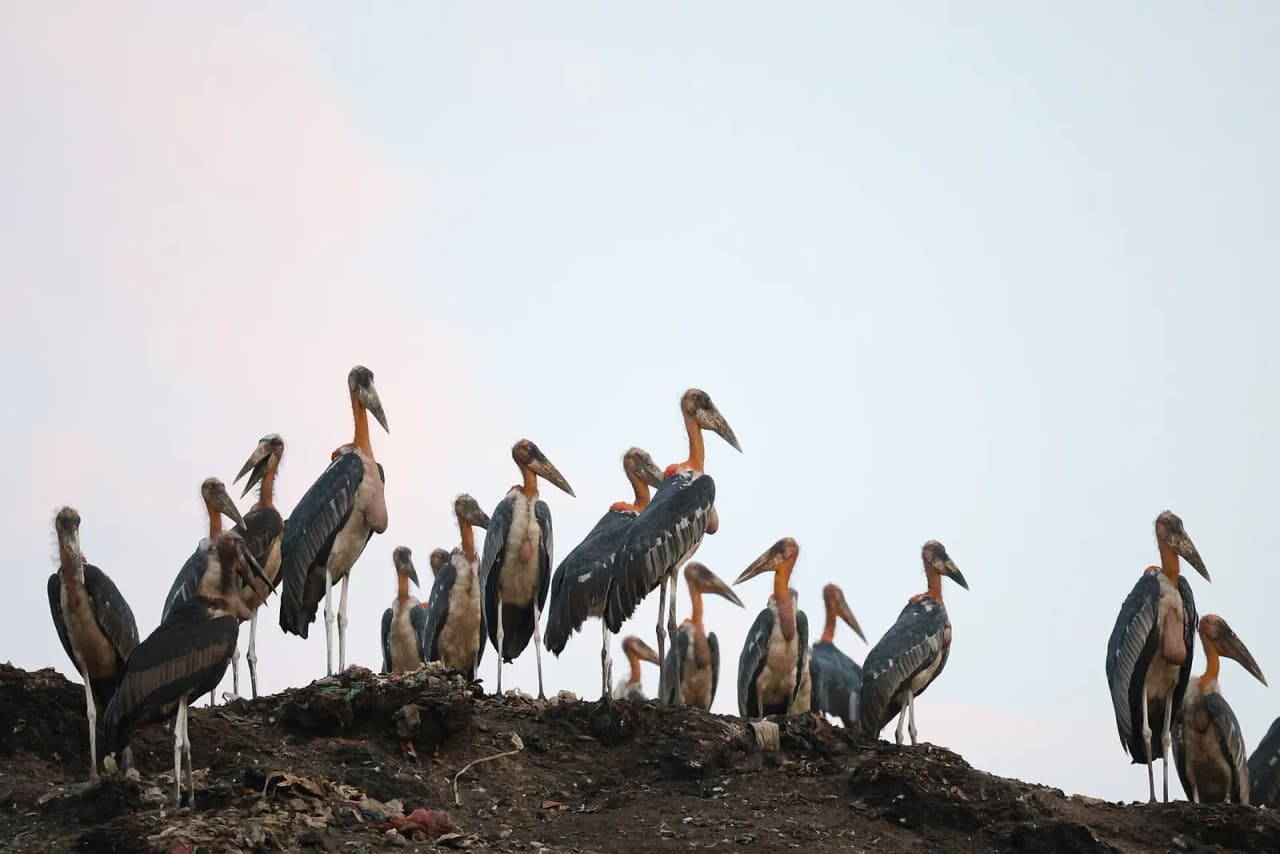
An endangered greater adjutant stork, known in Assam as the Hargila, died after flying into an overhead high-voltage power line near Geetanagar College in Guwahati late on Monday night, as Diwali firecrackers went off across the city.
According to forest officials quoted by The Sentinel, the bird had flown in from the direction of the Assam State Zoo. Witnesses said it appeared disoriented and panicked by the loud explosions nearby, flew erratically in the dark and struck the line, dying on the spot.
'Heartbreaking'
Conservationist Purnima Devi Barman, who leads the community-based Hargila Army campaign to protect the species, said on social media that she was deeply pained by the death. She said it was heartbreaking to imagine what the bird went through in its final moments, and appealed to people to limit firecrackers and be more sensitive towards wildlife.
Environmentalists say sudden flashes and loud bangs cause severe stress in birds, can drive them from their nests and make collisions with wires and buildings more likely at night. Residents have called on the administration to enforce firecracker-free zones around known stork roosting and nesting sites.
Why the Hargila matters
The greater adjutant is listed as Endangered by the IUCN and is protected under Schedule I of the Wildlife (Protection) Act. Assam holds the bulk of the world's remaining population, and Guwahati, with colonies in Dadara, Pacharia and Singimari in Kamrup district and roosts within the city, is one of the bird's most important strongholds.
The large scavenging storks are a familiar sight at Guwahati's garbage dumps and wetlands, where they live alongside dense housing, roads and power lines. Electrocution and collisions with overhead lines are among the recognised threats to the species in urban areas.
A conservation success under pressure
The Hargila was once considered a bad omen and a nuisance in Assam, and nesting trees were often cut down. Over the past two decades, the Hargila Army, a group of mostly rural women in Kamrup district mobilised by Barman, has helped change that by protecting nesting trees, rescuing chicks that fall from nests and turning the bird into a symbol of local pride. Nest counts in the Kamrup colonies have risen sharply as a result, and Barman's work has won international recognition, including the UN's Champions of the Earth award.
Conservationists say that progress can be undone by avoidable deaths in cities. Each adult bird counts for a species with such a small global population, and the storks roost and forage across Guwahati at night as well as by day.
Wildlife groups typically advise residents who find an injured or grounded stork not to handle it and to inform the Forest Department or a local rescue group.
Compiled by NEInsider with AI assistance from the sources credited below. How we use AI
Sources and credits. With inputs from The Sentinel https://www.sentinelassam.com/north-east-india-news/assam-news/diwali-firecracker-panic-triggers-fatal-electrocution-of-rare-greater-adjutant-stork-in-guwahati
Share this story
Forward it to your family WhatsApp group. News from home travels fastest there.
Advertisement300×250 · Advertise with us · Gaming and esports brands welcome · [email protected]