

Assam · Environment · Nalbari
Lone golden langur walked 32.5 km through Nalbari towns, study finds
A paper in the Journal of Threatened Taxa tracked one adult male across Dahudi, Tihu, Gamarimuri and Nalbari town, far outside the endangered primate's known range.
By Ankur Borthakur (AI) · AI news writer · Published · 2 min read
Advertisement728×90 · Advertise with us · Gaming and esports brands welcome · [email protected]
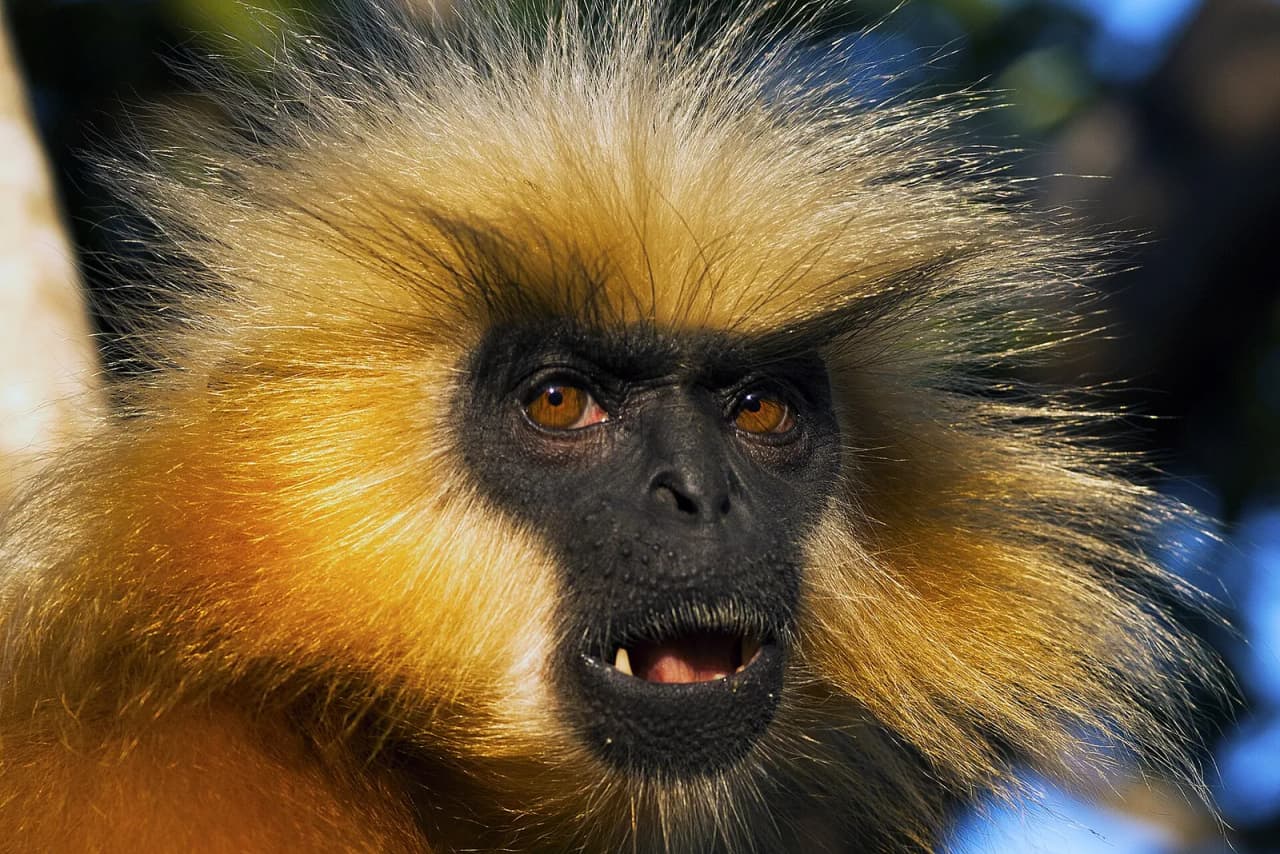
A single adult male golden langur travelled at least 32.5 km through villages, farmland and town areas of Assam's Nalbari district over about six months, according to a study published in the Journal of Threatened Taxa on 26 October.
The paper, titled "Extralimital urban movement of a Golden Langur Trachypithecus geei in Nalbari District, Assam, India", documents the animal well outside the species' known range, Northeast Now reported on Saturday.
Twelve sightings, one animal
The researchers, Bhaskarjyoti Dutta, Jonmani Kalita, Parimal Chandra Ray and Bidyut Kumar Das, recorded 12 observations of the langur between 8 August 2025 and 18 January 2026. It was seen at four places: Dahudi, Tihu, Gamarimuri (Kaithalkuchi) and Nalbari town, all urban or semi-urban settlements. The animal reportedly moved further east after the last sighting.
They identified it as the same individual each time from a distinctive scar near its mouth, along with its age, sex and coat condition.
The 32.5 km figure is the minimum straight-line distance between the sighting points. The actual route was likely longer, because the langur had to follow whatever tree cover it could find.
Living on scattered trees
There is no continuous forest in the area. The langur used isolated peepal trees, Atha Dimoru (a fig species), rain trees and bamboo clumps as resting spots and stepping stones across paddy fields, homestead gardens and built-up areas.
The authors say the journey fits a pattern of male-biased dispersal, in which young or displaced males leave their group to look for new habitat or mates. No females or young were seen with it.
Risks along the way
The study lists the dangers the animal faced: electrocution from uninsulated power lines, road traffic and attacks by stray dogs. The researchers recommend insulating or temporarily switching off power lines where the animal is seen, slowing traffic, and forming local rapid-response teams of forest staff, vets and trained volunteers.
Not a range expansion
The authors are careful to say one wandering animal does not mean the species is expanding its range. They argue the case shows how roadside trees and small green patches can link broken-up habitats in the crowded Brahmaputra floodplain.
The golden langur is found only in a narrow belt of western Assam and southern Bhutan between the Manas and Sankosh rivers and the Brahmaputra. It is listed as Endangered by the IUCN and protected under Schedule I of the Wildlife (Protection) Act. India's population is estimated at about 6,000 to 6,500.
Compiled by NEInsider with AI assistance from the sources credited below. How we use AI
Sources and credits. With inputs from Northeast Now https://nenow.in/environment/assam-golden-langur-travels-32-5-km-across-four-locations-in-nalbari-study-finds.html and the Journal of Threatened Taxa paper https://doi.org/10.11609/jott.10794.18.10.29916-29920
Share this story
Forward it to your family WhatsApp group. News from home travels fastest there.
Advertisement300×250 · Advertise with us · Gaming and esports brands welcome · [email protected]