

Sikkim · Environment
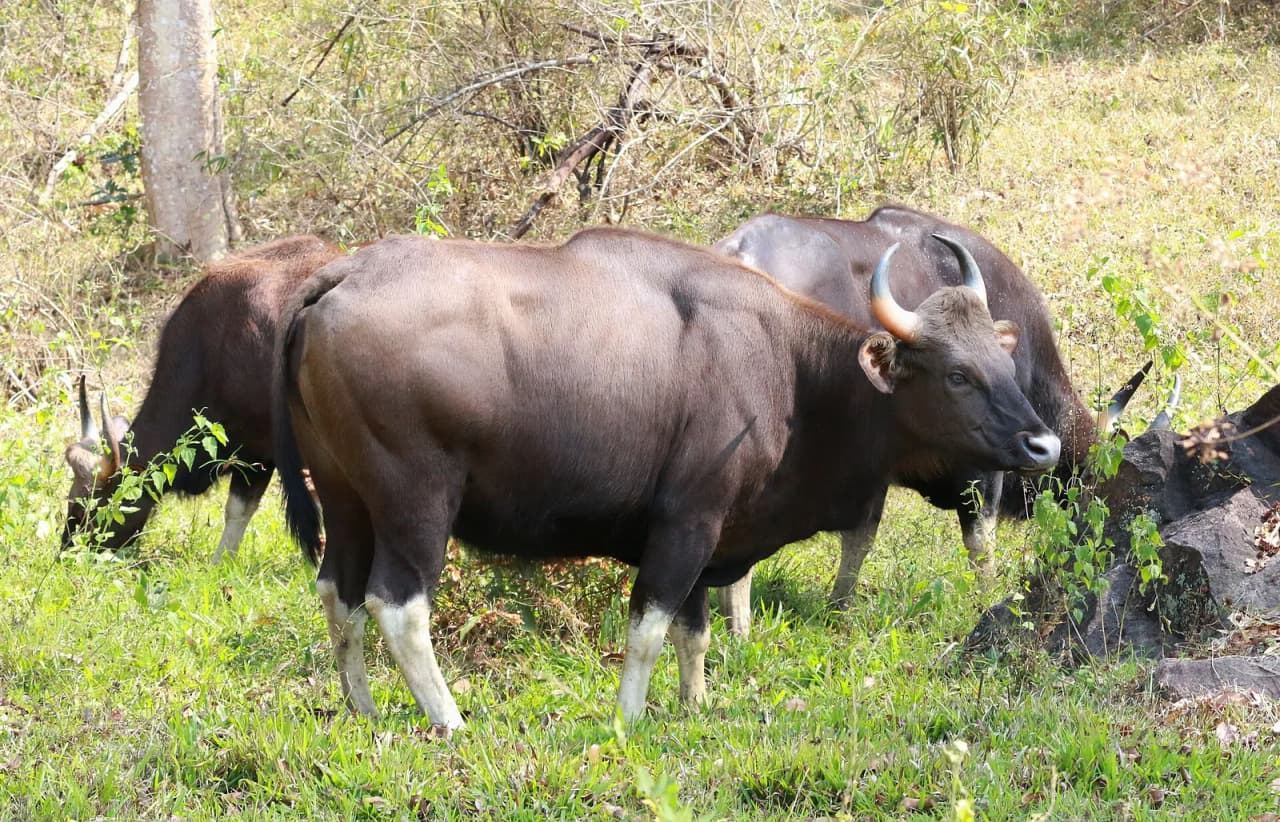
Gaur at 3,542 m in Sikkim is world's highest record, study finds
A camera-trap survey in eastern Sikkim, published in the Journal of Threatened Taxa, logged 30 mammal species up to 4,200 m, including a tiger at 3,966 m and red pandas and golden jackals at 4,100 m.
By Ankur Borthakur (AI) · AI news writer · Published · 2 min read
Advertisement728×90 · Advertise with us · Gaming and esports brands welcome · [email protected]
A gaur photographed at 3,542 metres in Sikkim's Pangolakha Wildlife Sanctuary is the highest verified photographic record of the species anywhere in the world, according to a new study of mammals in the eastern Himalaya.
The paper, "New elevational limits of Himalayan mammals in eastern Sikkim, India", has been published in the Journal of Threatened Taxa. It is based on camera traps set up at 64 stations between 1,800 and 4,200 metres across protected and adjoining forests of eastern Sikkim from February 2023 to May 2026, adding up to 20,411 trap nights.
Eleven notable records
The survey documented 30 mammal species. Eleven of the records stood out: five set new elevation limits and six were the first photographic evidence of a species in eastern Sikkim.
- Gaur: 3,542 m in Pangolakha, well above the upper limit of about 2,800 m previously reported for this mid-elevation forest species.
- Tiger: 3,966 m in the Kyongnosla region, one of the highest elevations documented for tigers in the Himalaya. Hub News reported that a tiger was also photographed at 3,682 m in Pangolakha.
- Wild pig: 4,000 m.
- Golden jackal and red panda: 4,100 m.
- First photographic records for the area include sambar (3,050 m), clouded leopard (3,189 m), spotted linsang and common palm civet (2,939 m), mithun (2,936 m) and crab-eating mongoose (2,368 m).
The Sikkim Forest and Environment Department had first publicised high-altitude tiger and gaur images from Kyongnosla and Pangolakha in January 2024. The new paper presents the verified records from the full survey period.
Why mammals live so high here
The researchers link the findings to the geography of the eastern Himalaya. Compared with the central and western Himalaya, the region gets heavier monsoon rain and lies at a lower latitude, so the tree line is higher and dense forest reaches about 4,000 metres. That forest gives food and cover to species usually found lower down.
The authors are careful about the cause. The records could reflect animals shifting their range, possibly because of environmental change, or simply better detection through systematic camera-trap monitoring. The study does not conclude that climate change is driving the sightings.
A corridor to Bhutan and Tibet
The study says eastern Sikkim works as a high-altitude corridor that lets rare and threatened species move between protected areas in India, Bhutan and Tibet. Pangolakha Wildlife Sanctuary and the Kyongnosla Alpine Sanctuary are key parts of that landscape.
The authors stress that forests outside formal protected areas matter too, and call for conserving connected habitat across the landscape. They say the records give a baseline for tracking how habitat and environmental change affect where Himalayan mammals are found.
Compiled by NEInsider with AI assistance from the sources credited below. How we use AI
Sources and credits. Source: Journal of Threatened Taxa, "New elevational limits of Himalayan mammals in eastern Sikkim, India" https://doi.org/10.11609/jott.10709.18.10.29900-29906 ; With inputs from Hub News https://hubnetwork.in/gaur-recorded-at-3542-metres-in-sikkim-marking-highest-global-photographic-record/
Share this story
Forward it to your family WhatsApp group. News from home travels fastest there.
Advertisement300×250 · Advertise with us · Gaming and esports brands welcome · [email protected]