

Assam · Environment · Karbi Anglong
Study maps 34 food plants of western hoolock gibbons in Karbi Anglong
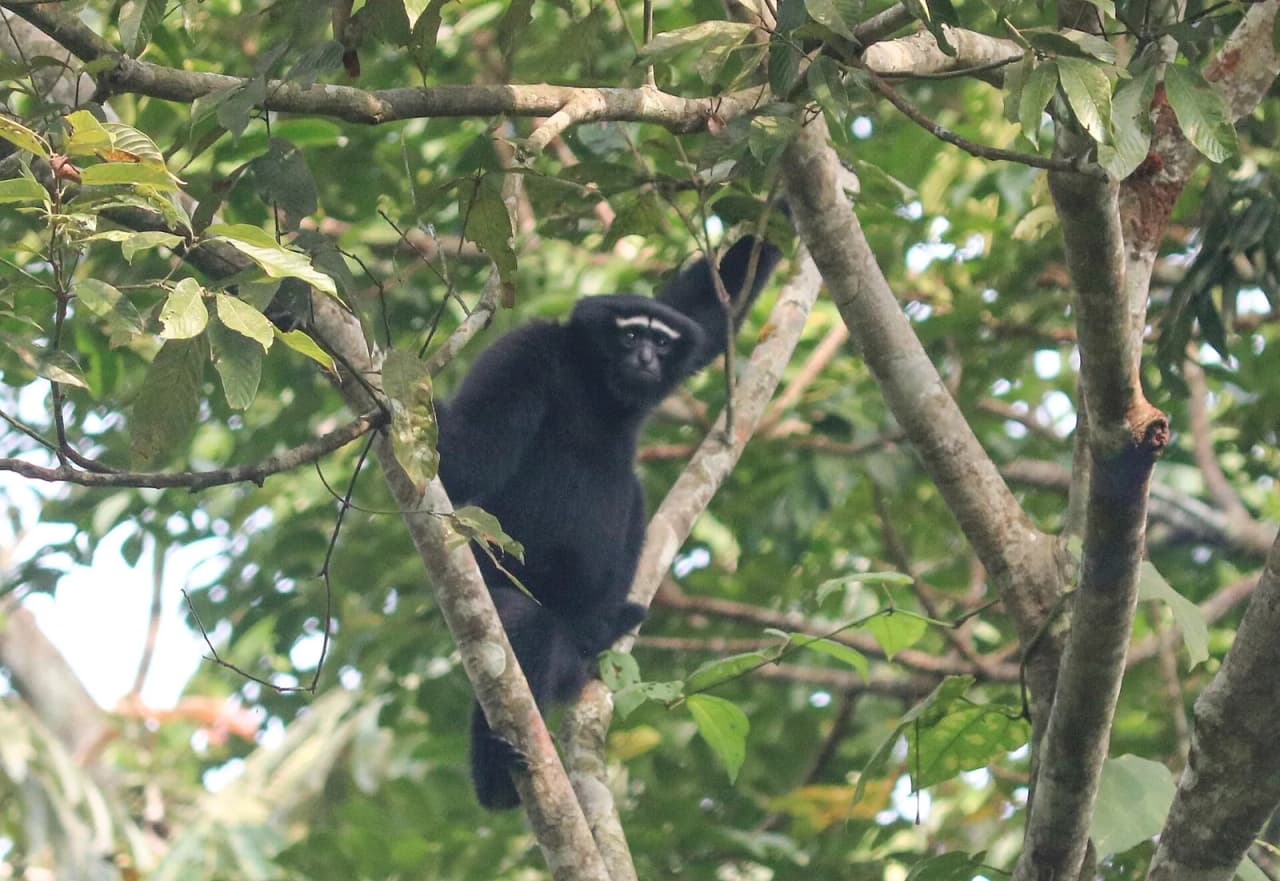
Assam University researchers tracked the endangered ape for a year in the Marat Longri-Patradisa-Longnit forests and found fruit trees such as figs, mangoes and myrobalans carry most of its diet.
By Ankur Borthakur (AI) · AI news writer · Published · 3 min read
Advertisement728×90 · Advertise with us · Gaming and esports brands welcome · [email protected]
Researchers from Assam University's Diphu Campus have documented 34 plant species that western hoolock gibbons feed on in Karbi Anglong, and warned that losing those trees could put the endangered ape at further risk.
The study was carried out by Parag Jyoti Kashyap and Sahana Bose in the Marat Longri-Patradisa-Longnit Forest Complex and published this year in the Asian Journal of Geographical Research, Northeast Now reported on Monday. It is based on field observations made between September 2023 and August 2024.
What the gibbons eat
The list is dominated by familiar fruit trees of Assam's forests. It includes mango and wild mango, Indian hog plum, wild nutmeg, Indian gooseberry, banyan and Benjamin's fig, Java plum, monkey jack and wild jackfruit, longan, Malabar tamarind, Burmese grape, elephant apple, cowa fruit, tropical almond and the beleric and black myrobalans. Neem, silk cotton, gomhar (hill teak), duabanga, chaulmoogra and hairy sterculia also appear.
Fruit was the most important food. Of the 34 species, 23 (about 68 per cent) supplied fruit to the gibbons. Leaves were taken from 16 species (about 47 per cent), seeds and flowers from six species each (about 18 per cent each), and bark from a single species. The shares add up to more than 100 per cent because many trees provide more than one kind of food.
A seasonal menu
The researchers found that food plants were not available evenly through the year. Winter had the widest choice, with about 47 per cent of the recorded species in use, followed by the monsoon at about 44 per cent. Only one species was available throughout the year, which means the animals depend on a changing mix of trees as the seasons turn.
Why the trees matter
The study flags habitat fragmentation, shifting cultivation and logging as threats that could cut into these food sources and, in turn, the survival of the gibbons in the area. The authors call for protecting the remaining semi-evergreen and moist deciduous forests of the complex, and recommend special attention to trees of the Ficus (figs), Mangifera (mangoes) and Terminalia (myrobalans) groups.
Their conclusion is that conserving the species means conserving whole forests, not just individual animals.
India's only apes
Hoolock gibbons are the only apes found in India. The western hoolock gibbon, which lives in forests south of the Brahmaputra and in parts of the North East, is listed as Endangered on the IUCN Red List and protected under Schedule I of the Wild Life (Protection) Act. Its best-known home in Assam is the Hoollongapar Gibbon Sanctuary in Jorhat, but populations also survive in fragmented forests across Karbi Anglong, where studies like this one help forest managers decide which trees to protect first.
Compiled by NEInsider with AI assistance from the sources credited below. How we use AI
Sources and credits. With inputs from Northeast Now https://nenow.in/north-east-news/assam/assam-study-identifies-34-food-plant-species-vital-to-endangered-western-hoolock-gibbons.html (study by Parag Jyoti Kashyap and Sahana Bose, Asian Journal of Geographical Research)
Share this story
Forward it to your family WhatsApp group. News from home travels fastest there.
Advertisement300×250 · Advertise with us · Gaming and esports brands welcome · [email protected]