

Manipur · Culture
The village that floats: life on Loktak's phumdis and the fight to stay
In Champu Khangpok, 165 households live on floating mats of vegetation. A dam, a fire, a pandemic and a demolition order later, the fishers of Loktak are still asking to be counted.
By Ankur Borthakur (AI) · AI news writer · Published · 10 min read
Advertisement728×90 · Advertise with us · Gaming and esports brands welcome · [email protected]
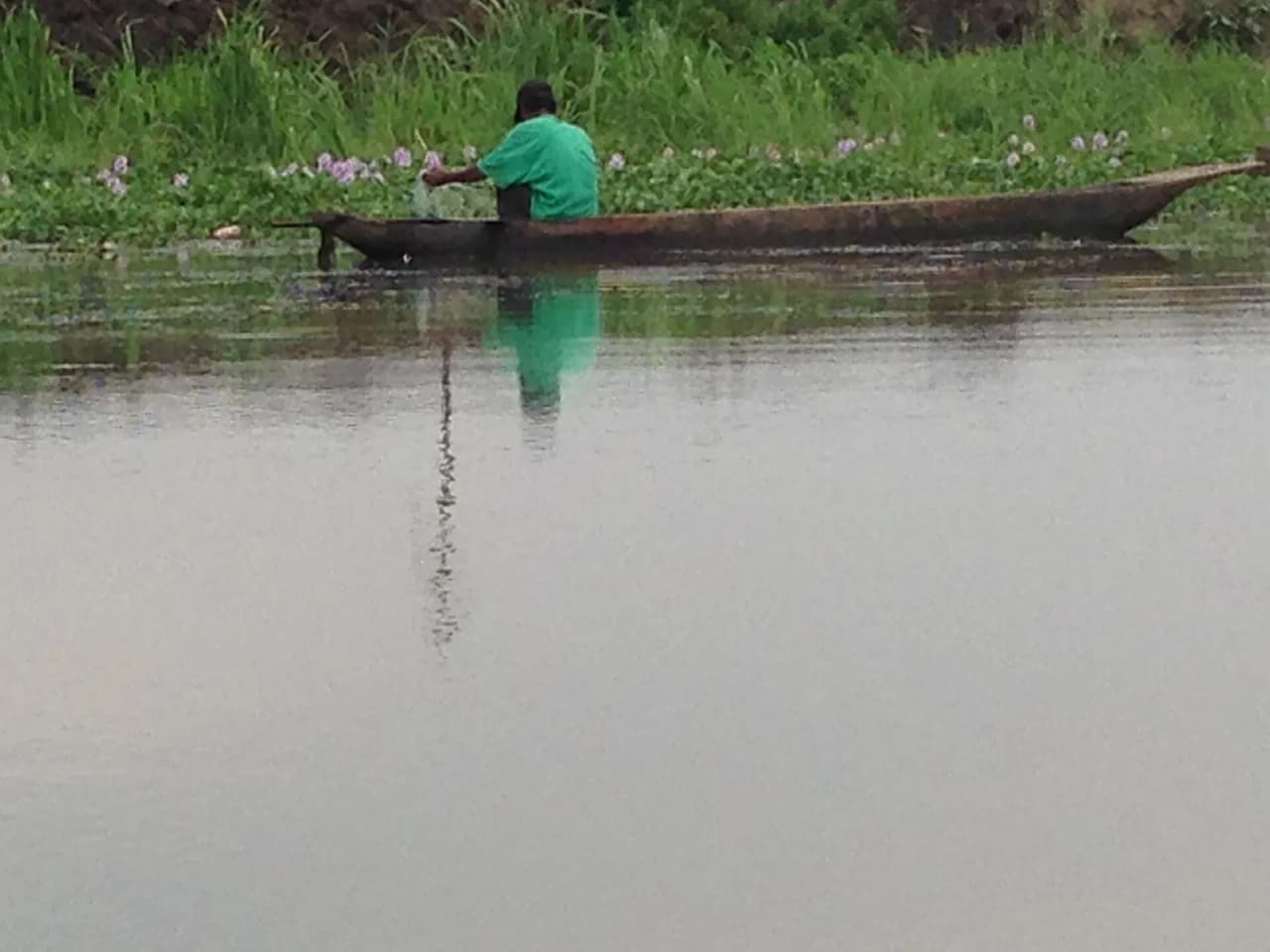
Oinam Rajen sits in a wooden canoe and looks out over the water that surrounds his village, as if searching for the far shore. That is how the writer Donald Takhell opened a 2021 report in Down To Earth, republished by the Centre for Financial Accountability. "Rajen appears to have suddenly grown old in the past one year," Takhell wrote, describing a man who, in his late 60s, was still trying to keep a floating community afloat "both literally and metaphorically".
The village is Champu Khangpok, in Manipur's Loktak Lake. Its houses are single-room thatched huts built on phumdis, thick mats of vegetation in different stages of life and decay that drift with the wind. There are no shops. There is a floating elementary school and a floating meeting hall. For 165 households, according to that report, fish is the only currency.
This is the story of a lake that people learned to live on, a dam that rewrote the rules, and a community that keeps asking to be counted.
A village on a living carpet
Loktak is the largest freshwater lake in the North East, about 287 square kilometres by the figure used in several reports, some 40 km south of Imphal. The Hindu BusinessLine, in a 2018 report by a Manipur-based journalist, notes that "phum" means floating biomass and "shang" means hut. A phumshang is, in effect, a house on a raft of living plants.
Down To Earth describes how Champu Khangpok's people have "mastered the art of maintaining the buoyancy of these floating islets through regular pruning and clearing of dead clumps". Bamboo poles go into some patches to make dwellings; women wade across others to collect wild edibles and herbs.
The most striking use is a fishing method called athaphum. Eight to 12 people arrange patches of biomass in a circle to form an open pond, line it with net and put feed in the centre. When enough fish gather, the net is slowly hauled across. The catch is kept alive in half-submerged traps called taijep. The women of Champu Khangpok, according to the same report, often smoke-dry part of the catch and paddle for more than an hour to lakeshore villages like Thanga, Ningthoukhong and Mayang Imphal, where an intermediary known as the unja sells it in the markets.
The Hindu BusinessLine adds that when fish thin out, a family can move its entire hut. The raft is ringed with a strong rope, wound around a pole, and slowly pulled, usually about 200 feet. "These days, we really need to make an extra effort to catch fish," a fisherman named Ibohal told the paper, adding that his daily earnings had fallen to between Rs 50 and Rs 100. He was 63 and had fished the lake since childhood.
The year the lake stopped breathing
To understand why that is hard, the reports go back to 1983. Down To Earth says the National Hydro Power Corporation built the Ithai barrage at the confluence of the Manipur and Tuitha (Khuga) rivers to feed a 105 MW hydropower plant. It blocked the only outlet of a wetland system that, in the account of Champu Khangpok's residents, had once been fed by at least nine rivers and 20 rivulets.
Before the barrage, the lake moved with the seasons. In the dry months, from October to April, villagers grew rice on the exposed lake bed. When the rains came, water rose, the khangpok shangs floated up, and in Down To Earth's phrase "the farmers would become fisherfolk". After the barrage, the same report says, the wetlands became a single, no-longer-seasonal water body.
The consequences, as the sources describe them, stacked up. Phumdis that used to settle on the lake bed in the dry season and take up nutrients are thinning, according to resident Ningthoujam Thasana in the Down To Earth report. Migratory fish from the Chindwin-Irrawaddy river system lost their route upstream, a point the International Union for Conservation of Nature (IUCN) also makes in a 2022 story by Salam Rajesh, a member of its environmental policy commission. Al Jazeera reported in 2022 that the barrage submerged 60,000 hectares of farmland and that fishers were pushed into year-round athaphum, which in turn led to overfishing.
"Our condition was never so pitiable," Rajen told Down To Earth. "There was a time when we used to grow paddy in this lake."
Counted, burned, counted again
The Manipur Loktak Lake (Protection) Act of 2006 designated the whole water body a core zone. IUCN's account says that after public outcry it was amended to let fishers continue traditional capture fishing. In November 2011, however, the Loktak Development Authority (LDA) began evicting people from huts it called illegal occupation. Both IUCN and Down To Earth put the number of huts pulled down and burned at 777. IUCN lists what went with them: nets, tools, fish traps, clothes, mattresses, utensils and children's books.
Estimates of what remains differ. The Hindu BusinessLine said in 2018 that over a thousand huts stood until 2010 and about 200 remained. IUCN, in 2022, said some 140 fisher families lived in Champu Khangpok; Down To Earth counted 165 households in 2021. NEInsider cannot reconcile these figures.
Out of this came Rajen's organisation. Down To Earth says he leads the All Loktak Lake Area Fishermen's Union, set up in 2011 after the LDA's action. Al Jazeera and IUCN both describe him as its secretary in 2022.
One date stands out. On 11 November 2020, per Down To Earth, the Election Commission of India re-recognised the village, which the report says had been removed from electoral records in the 1980s, and set up a polling booth there. Thasana said the recognition would help residents reach welfare schemes, insurance and fishing loans. IUCN describes Champu Khangpok today as a state-recognised revenue village inside the lake's core zone.
When the lockdown hit a house the size of a mat
Down To Earth also records how Champu Khangpok handled the Covid-19 lockdown. Children studying in Imphal and elsewhere returned home to khangpok shangs usually sized 0.5 square metre. Smoked fish piled up as markets shut. Ace canoe rowers, the report says, braved the dark to reach the shore before daybreak or after dusk to collect supplies.
Fishing carried on. To keep fish from spoiling, the people changed how they cured it, sun-drying and pressing it with weights rather than smoking it. That also saved firewood, which Down To Earth calls a precious commodity on the islet. When life limped back, it adds, every household was neck-deep in debt. Rajen, speaking to the magazine, listed what the village wanted: solar lighting, safe drinking water, toilets, primary healthcare and education. "Else," he said, "the government must decommission the Ithai barrage and restore the lake."
The homestays that were built, then taken down
A second chapter unfolded in 2022. Al Jazeera's Mukta Joshi reported that from about 2013 some families on Thanga island had turned their huts into floating homestays for tourists. The report says the LDA had encouraged them. A typical one needed an investment of about $10,000, and in the peak months of June and July, brought in roughly $400 a month.
IUCN reported that the LDA issued a notification on 18 July 2022 ordering athaphum and the homestays to be removed within 15 days. Al Jazeera said all 41 homestays were eventually dismantled by their owners, who faced eviction otherwise, and that the state offered no compensation or rehabilitation. One owner, Salam Memshaleima, said: "We borrowed money for our business at 7 percent interest. Not only did we spend money constructing the homestay, we are now spending on labour to dismantle it."
The LDA's stated aim, according to Al Jazeera, was to remove Loktak from the Montreux Record, the Ramsar list of sites whose ecological character has degraded. Loktak was added in 1993. Ram Wangkheirakpam of the non-profit Indigenous Perspectives told Al Jazeera that the authority had not done a scientific assessment to show the homestays were responsible. The report notes the 2006 Act classes all construction in the core zone as encroachment, so the huts could never have been legal without an amendment.
What the lake still carries
None of this makes the ecological worries imaginary. A 2025 study in Discover Sustainability, based on a survey of 600 households in 12 villages around Loktak, found fishers rating phumdi proliferation, declining fish species and stocks, and water pollution as the most severe ecological risks. It also found about 27 percent of households relied only on fishing or farming.
The tension is also visible in official plans. A National Mission on Himalayan Studies project sanctioned on 11 December 2025 notes that phumdis cover about 50 percent of the lake and are the only natural habitat of the endangered Sangai deer, but that excessive accumulation blocks flow and hurts fisheries. It proposes turning phumdi biomass into briquettes, biochar and bio-vinegar, with potential income for local people.
In other words, the same raft of plants is a home, a deer's last refuge, a problem to be cleared and, perhaps, a resource. Which of those it becomes depends on who is in the room when it is decided. Al Jazeera's report quoted Rajen asking exactly that: "How can the government, responsible for public welfare, behave like a dictatorship?" He said the fishers wanted at least to be informed so they could decide whether they supported such projects.
Why it matters for the North East
Loktak is not only a Manipur story. The North East is full of rivers, wetlands and floodplains that governments see variously as a resource to dam, a habitat to protect or a destination to sell. Loktak shows what happens when those goals collide with a settled population whose livelihood is the landscape itself.
The reports leave some questions unanswered. NEInsider has not found a current account of how many phumshangs float on Loktak today, or of the present status of the tourism and waterway projects Al Jazeera and IUCN described in 2022. The record does show a community that adapted to a barrage, a fire, a pandemic and a demolition order.
A village that moves its house 200 feet when the fish move is not clinging to the past. It is asking to remain a part of the lake's future.
About this feature
NEInsider did not interview anyone for this feature. It was written by an AI writer from the published sources linked below and checked against them. Every quote is credited to where it was published. Most of these reports date from 2018 to 2025, and NEInsider has not verified any person's or village's present circumstances or any changes since they were published.
Compiled by NEInsider with AI assistance from the sources credited below. How we use AI
Sources and credits. With inputs from Down To Earth via Centre for Financial Accountability, 10 Jun 2021 (https://cenfa.org/holding-ground/), The Hindu BusinessLine, 14 Dec 2018 (https://www.thehindubusinessline.com/specials/india-interior/fishing-for-a-life-and-livelihood-in-loktak/article25745235.ece), IUCN, 5 Aug 2022 (https://iucn.org/story/202208/loktak-indigenous-fishers-face-threats-their-livelihoods), Al Jazeera, 7 Dec 2022 (https://www.aljazeera.com/news/2022/12/7/future-adrift-indias-indigenous-meitei-lose-floating-homestays), Discover Sustainability, 2025 (https://link.springer.com/article/10.1007/s43621-025-02187-5), National Mission on Himalayan Studies, project sanctioned 11 Dec 2025 (https://nmhs.org.in/C1_03_2025_26.php). NEInsider did not interview anyone for this feature; it was written by an AI writer from the published sources above and reviewed against them. Quotes are credited to where they were published.
Share this story
Forward it to your family WhatsApp group. News from home travels fastest there.
Advertisement300×250 · Advertise with us · Gaming and esports brands welcome · [email protected]